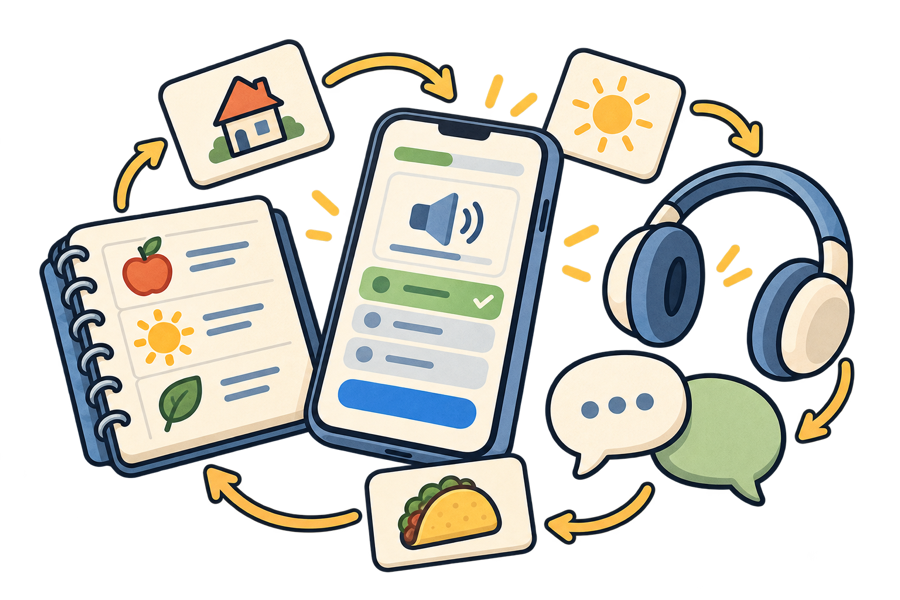
VocabTally vs Duolingo at a glance
| What you need | VocabTally | Duolingo |
|---|---|---|
| Main purpose | Collect, count and revisit your Spanish vocabulary | Follow a structured language course |
| Where words come from | Words you add from reading, classes, conversations and themed decks | Vocabulary introduced through the course |
| What progress represents | Your saved vocabulary total and learning activity | Progress through lessons, units and learning activities |
| Review | Flashcards, quizzes and spaced review | Practice built into the course |
| Grammar and broader skills | A companion for vocabulary; no complete grammar course | Lessons combine vocabulary with broader language skills |
| Best starting point | You already learn Spanish somewhere and want to keep the words | You want the app to choose a sequence of lessons |
Who Duolingo is best for
Duolingo suits learners who want to open an app and be told what to study next. Its course provides a sequence and integrates practice, so you do not have to curate a personal word list before getting started. That structure can be especially helpful when you are beginning Spanish or returning after a long break.
It is also a fair choice if lesson completion helps you maintain a routine. VocabTally does not replace that syllabus: collecting nouns and reviewing flashcards is not the same task as learning how sentences work or developing all four language skills.
Who VocabTally is best for
VocabTally fits learners whose Spanish comes from several places: a class on Monday, a video on Tuesday and a conversation at the weekend. Add the words you recognise and understand, see your personal total grow, then practise vocabulary you want to keep. Your collection follows what you learn rather than the order of someone else’s course.
For example, you may learn sartén while cooking with a friend even though it has not appeared in your lessons. Add it to your vocabulary, revisit it in practice and keep building a record of the Spanish you encounter. A saved word is your own learning record, not independent proof that you can use it fluently in every situation.
Replacing a course or adding a word tracker?
If your problem is “I do not know what to study next,” a structured course may still be the better answer. If it is “I keep learning words but cannot see or maintain my growing vocabulary,” VocabTally addresses that more directly. You can use both: keep the course for its sequence and use your word collection across everything else you read, hear and practise.
This page compares the two jobs so you can choose a tool. If you plan to keep Duolingo and want a broader study setup, read the best apps to use with Duolingo for Spanish. You can also explore the Spanish vocabulary tracker or try a topic deck.
For details of Duolingo’s course and practice approach, see its official guide to learning with Duolingo. Features can vary by course and platform.
FAQ
Is VocabTally a Duolingo alternative?
For personal Spanish vocabulary tracking, yes. For a complete guided language course, no: VocabTally focuses on collecting and reviewing words.
Can I use VocabTally with Duolingo?
Yes. Add words you understand from your lessons and from other sources, then use VocabTally to revisit them.
Does Duolingo include review?
Yes, practice is built into its course. The difference is the learning workflow, not the absence of review in Duolingo.
Does VocabTally automatically import my Duolingo words?
No automatic Duolingo import is offered here. You choose and add the words you want to track.
Updated